
Is an Enlarged Prostate the Same as Prostate Cancer, and How Do You Tell the Difference?
Enlarged prostate and prostate cancer share a name and a location, but they are not the same condition. Here is what 2025–2026 urology guidance says about BPH, screening, and when to worry.
Medically reviewed by Dr. Helena Voss, PharmD
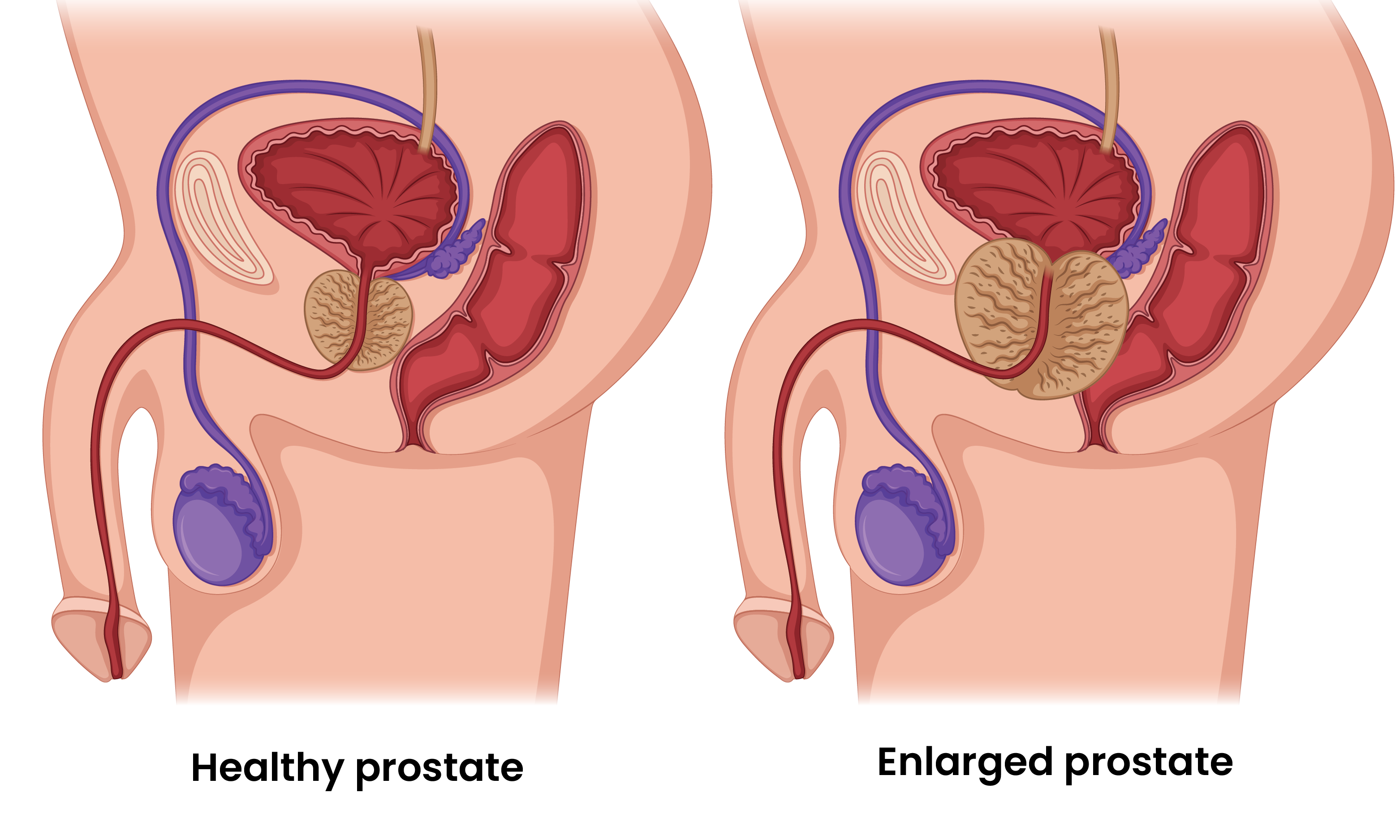
Men's health is conspicuously absent from most wellness coverage. Enlarged prostate is a useful place to start because it is common, often misunderstood, and sits at the intersection of urinary, sexual, and anxiety-related symptoms that affect quality of life.
Key Definition: Benign prostatic hyperplasia (BPH) is a noncancerous enlargement of the prostate gland that compresses the urethra, causing lower urinary tract symptoms such as weak stream, hesitancy, frequency, and nocturia (American Urological Association, 2025).
Key Stat: Roughly 50% of men ages 60 and older have clinically significant BPH, and the prevalence rises to over 80% by age 80 (AUA/CDC epidemiology data).
What Is BPH, and How Is It Different From Prostate Cancer?
BPH is enlargement; prostate cancer is malignancy. They can coexist, but BPH does not turn into cancer, and cancer does not require BPH. The confusion is understandable: both affect the same gland, both become more common with age, and both can cause urinary symptoms.
The critical distinctions:
- BPH: enlarged but benign tissue pressing on the urethra
- Prostate cancer: malignant cells that may or may not affect urine flow
- Shared symptoms: weak stream, frequency, nocturia
- Cancer red flags: bone pain, unexplained weight loss, abnormal digital rectal exam (DRE), elevated or rising PSA
PSA testing is not specific to cancer. BPH, prostatitis, and recent ejaculation all raise PSA. A single elevated PSA is not a cancer diagnosis. Your clinician interprets it alongside DRE, age-specific ranges, and trend data.
What Symptoms Should Actually Worry You?
BPH symptoms fall into two categories: storage and voiding.
Voiding symptoms (obstruction):
- Weak or intermittent stream
- Hesitancy (difficulty starting)
- Straining to void
- Incomplete emptying sensation
Storage symptoms (irritation):
- Frequency (every 1–2 hours)
- Urgency (sudden compelling need)
- Nocturia (waking multiple times nightly)
- Urgency incontinence
Men often tolerate symptoms for years before seeking care. By the time nocturia disrupts sleep three or more times nightly, quality of life and cardiovascular risk are both affected. The 2026 AUA guideline emphasizes earlier intervention for moderate-to-severe symptoms.
Red flags that need prompt evaluation:
- Blood in urine or semen
- Painful urination
- Acute inability to urinate (go to emergency)
- Unexplained weight loss or back pain
- PSA rising quickly on serial testing
How Is BPH Diagnosed?
The workup is straightforward and office-based:
- Symptom score: International Prostate Symptom Score (IPSS) quantifies severity
- Digital rectal exam (DRE): clinician feels prostate size and nodules
- PSA blood test: age-specific interpretation; tracks trend over time
- Urinalysis: rules out infection or hematuria
- Post-void residual: ultrasound measures bladder emptying
Your clinician may also order uroflowmetry (measures stream strength) or refer you to urology for more detailed imaging. The goal is to confirm BPH, rule out cancer, and assess symptom severity before choosing treatment.
What Are the Medication Options?
Two main drug classes treat BPH symptoms:
Alpha blockers (tamsulosin, alfuzosin, silodosin):
- Relax smooth muscle in the prostate and bladder neck
- Work within days to weeks
- Risk of dizziness and ejaculatory dysfunction (especially silodosin)
- Best for moderate symptoms; do not shrink the prostate
5-alpha reductase inhibitors (finasteride, dutasteride):
- Block conversion of testosterone to DHT, shrinking the prostate over 6–12 months
- Reduce long-term progression risk and need for surgery
- Risk of sexual side effects in roughly 20–30% of users
- Best for larger prostates (>30–40 mL)
Your clinician may prescribe both together for severe symptoms. Combination therapy is more effective than either alone but carries additive side effect risk.
For more on medication timing and interactions, see our blood pressure timing guide and pharmacist interaction call guide.
What Minimally Invasive Options Exist in 2026?
Surgery is not the only answer. The 2026 urology landscape offers several office-based or minimally invasive options:
- UroLift: Permanent implants that retract prostatic lobes; preserves sexual function; done in-office under local anesthesia
- Prostatic artery embolization (PAE): Interventional radiology procedure; middle-ground between medication and surgery
- iTind: Temporary implant that reshapes the prostatic urethra over 5–7 days
These options preserve sexual function in the majority of cases, which is the deciding factor for many men. They are not appropriate for all prostate sizes or shapes; urological consultation determines candidacy.
See our medication adherence guide for why consistent follow-through on any treatment plan—medical or procedural—determines long-term outcomes.
When Should You See a Doctor?
Men often delay care because of embarrassment, fear of cancer, or the belief that symptoms are just "getting older." Here is when to book an appointment:
- Symptoms are affecting sleep, work, or relationships
- You are waking two or more times nightly to urinate
- Stream has noticeably weakened over months
- You are self-medicating with OTC remedies without improvement
- You have risk factors: family history of prostate cancer, African American ancestry (higher risk)
A primary care clinician or pharmacist can start the workup. Urology referral follows based on findings.
Lifestyle Adjustments That Help
Medication and procedures are powerful, but daily habits modulate symptoms:
- Fluid timing: Drink most fluids earlier in the day; reduce evening intake to cut nocturia
- Caffeine and alcohol: Both irritate the bladder and increase urgency
- Medication review: Some drugs worsen symptoms (antihistamines, decongestants, tricyclic antidepressants)
- Bladder training: Timed voids and pelvic floor exercises improve control
- Temperature: Cold reduces urine output; warm relaxes the outlet. Find your comfort zone.
For more on medication reviews, see our antibiotic stewardship and pharmacy counter guide for how your pharmacist can catch interactions before they cause problems.
Frequently Asked Questions
Does an enlarged prostate mean I have cancer?
No. BPH is benign tissue growth; prostate cancer is malignant. They can coexist, but BPH itself does not become cancer. PSA testing and DRE help distinguish them.
Can BPH symptoms go away without treatment?
Mild symptoms may stabilize, but BPH is progressive. Without intervention, moderate symptoms typically worsen over years. Earlier treatment preserves more options.
Do over-the-counter supplements work for BPH?
Saw palmetto has mixed evidence; meta-analyses show no significant benefit over placebo for symptom score (urology research, 2025). Rye grass pollen extract and pygeum have modest signals. Discuss any supplement with your clinician because of drug interactions.
Is surgery the only option for severe BPH?
No. UroLift, PAE, and iTind offer outcomes between medication and traditional surgery, with better sexual side effect profiles in most cases. candidacy depends on prostate anatomy.
Can I take BPH medication with blood pressure drugs?
Alpha blockers lower blood pressure modestly. Tamsulosin is selective for the prostate and has minimal blood pressure effect, but monitoring is wise. See our blood pressure meds timing guide for coordination strategies.
Conclusion
Enlarged prostate is not cancer, but it is not normal aging to ignore either. The 2026 urology toolkit offers medication, minimally invasive procedures, and lifestyle changes that preserve urinary function and sexual health. Start with a symptom score and a clinician conversation. For the broader men's health picture, see our guides on strength training after 60 and protein needs by age.
Related in Preventative Health & Longevity
More from the same topic to keep reading.
Why Your Prostate Medication Stopped Working After Years, and What Comes Next in 2026
Preventative Health & Longevity · 8 min read
Why Medicare's $50 GLP-1 Program Won't Cover the Patients Who Need It Most
Preventative Health & Longevity · 8 min read
The Fatigue Your Standard Blood Test Misses: Iron Deficiency Without Anemia
Preventative Health & Longevity · 3 min read
Also tagged mens-health & bph
Cross-topic reads sharing key terms with this article.