
PFAS Microplastics Are Inside Us: What the 2026 EPA Interim Guidance Means for Your Kitchen
The EPA issued new interim guidance on PFAS destruction and disposal in April 2026, and NRDC warned that PFAS microplastics are a global contaminant found in human blood, placenta, lung tissue, and semen. Here is what to do now.
Medically reviewed by Dr. Helena Vasquez, MD
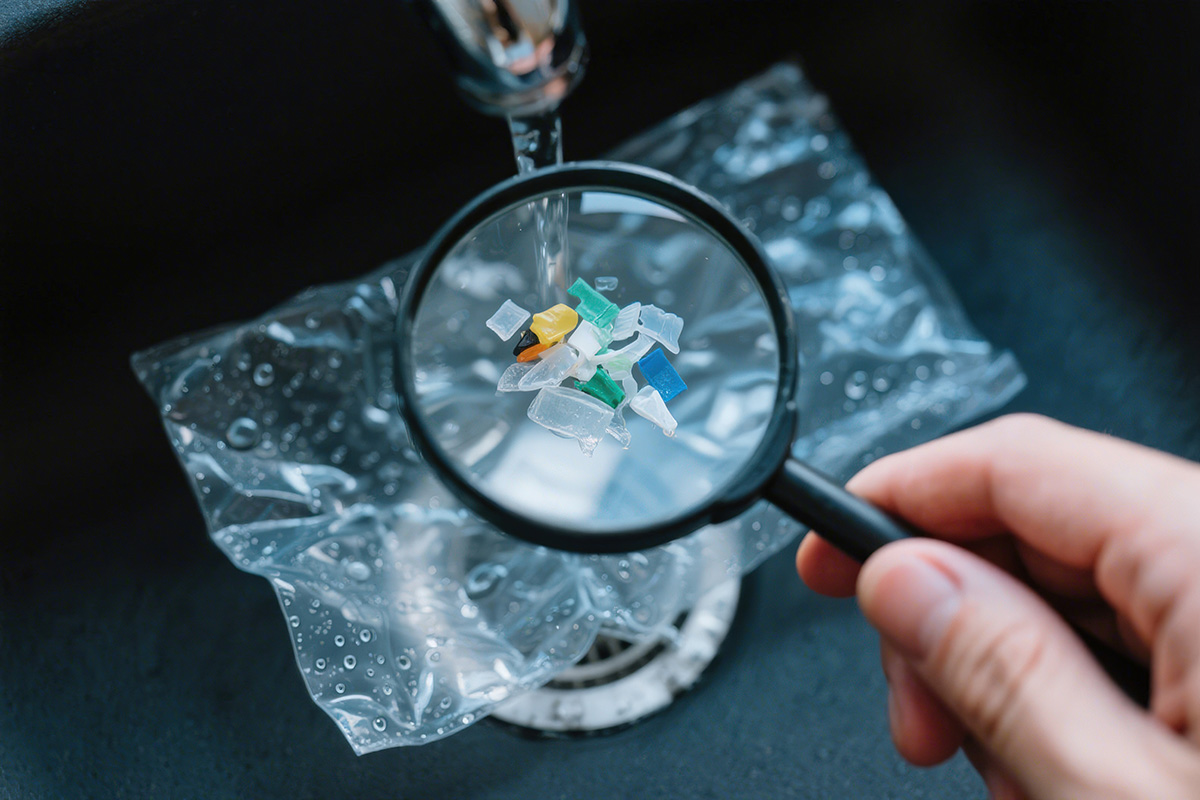
Forever chemicals meet micromonsters. PFAS microplastics are tiny plastic particles made from fluoropolymers such as Teflon that combine the persistence of PFAS with the ubiquity of microplastics. A April 2026 NRDC fact sheet warned that PFAS microplastics have been detected in human blood, placenta, urine, lung tissue, and semen, and that non-stick cookware and single-use food packaging are major everyday sources (NRDC, 2026).
Key Takeaways
- PFAS microplastics combine the persistence of PFAS with the ubiquity of microplastics, and have been detected in human blood, placenta, lung tissue, and semen (NRDC, 2026).
- The EPA issued updated interim guidance on PFAS destruction and disposal in April 2026, reflecting data reviewed through September 2025 (EPA, 2026).
- State-level PFAS phase-outs are taking effect in Minnesota, Maine, New York, Vermont, Colorado, Connecticut, Rhode Island, and Washington between mid-2026 and 2028 (NRDC, 2026).
What Are PFAS Microplastics?
PFAS are a class of more than 14,000 man-made chemicals known for heat, water, and stain resistance. Microplastics are plastic particles smaller than 5 mm now found virtually everywhere on Earth. PFAS plastics can degrade into microplastics under heat and physical wear, and PFAS microplastics are also intentionally added to cosmetics and coatings. The result is a contaminant that is both persistent and bioaccumulative (NRDC, 2026).
Citation capsule: PFAS microplastics have been found in human blood, placenta, urine, lung tissue, and semen, and recent research links them to reduced sperm counts, cardiovascular changes, and immune system effects (NRDC, 2026).
How Does This Affect Your Kitchen?
Cooking with non-stick coated cookware made from fluoropolymers can produce millions of micro- and nanoplastics when heated, according to cited research. Wastewater treatment facilities release PFAS microplastics into water bodies, and landfilling of PFAS-containing products can contaminate nearby soil and groundwater (NRDC, 2026).
Citation capsule: The EPA's April 2026 interim guidance on PFAS destruction and disposal provides a new technology evaluation framework to help managers analyze the safety and effectiveness of new destruction and disposal technologies, but it does not establish regulatory requirements (EPA, 2026).
What Should Consumers Do?
Look for terms that may indicate PFAS presence: water-resistant, stain-resistant, non-stick, grease-proof, easy clean, or low friction. "PFAS-free" labels are more reliable than "PFOA-free" or "PFOS-free," which refer to individual chemicals rather than the entire class. Consider switching away from high-heat non-stick cookware, reducing single-use plastic food packaging, and filtering drinking water (NRDC, 2026).
Frequently Asked Questions
Does my non-stick pan contain PFAS?
Many non-stick pans use PTFE, a fluoropolymer that can degrade into PFAS microplastics under high heat. Check manufacturer labels for "PFOA-free" claims, but note that PFOA-free does not mean PFAS-free (NRDC, 2026).
Is my tap water safe?
Federal drinking water standards currently cover PFOA and PFOS at 4 ppt each, but the EPA proposed in May 2026 to extend the compliance deadline to 2031 and rescind standards for four related PFAS. State standards in several states remain stricter than the federal floor (EPA, 2026).
Are PFAS microplastics proven to cause disease in humans?
Human causation is still being mapped. Early research links them to inflammation, hormonal disruption, cardiovascular changes, and reduced sperm counts, but definitive disease causation in humans remains under study (NRDC, 2026).
What is the EPA doing?
The EPA issued updated interim guidance on PFAS destruction and disposal in April 2026 and proposed drinking water rule changes in May 2026, including a compliance extension for PFOA and PFOS and rescission of standards for four additional PFAS compounds (EPA, 2026).
Conclusion
PFAS microplastics are a global contaminant with evidence of human exposure and early health signals, but the science is still evolving. The practical steps are straightforward: reduce high-heat non-stick cooking, filter drinking water, minimize single-use plastics, and watch state-level regulations that may move faster than federal rules.
Related in Public Health & Environment
More from the same topic to keep reading.
9/11 Dust Exposure: New Columbia Study Reveals Latency Risk for COPD
Public Health & Environment · 3 min read
Living Near Data Centers: Air Pollution Risks You Didn't Know About
Public Health & Environment · 3 min read
Why a $480,000-a-Year Pancreatic Cancer Pill Just Doubled Survival — and Who Can Actually Get It
Public Health & Environment · 7 min read
Also tagged PFAS & microplastics
Cross-topic reads sharing key terms with this article.