
Should You Wear a Continuous Glucose Monitor If You're Prediabetic? The 2026 Evidence
A 2026 analysis says CGMs may complement standard tests for prediabetes detection. Here is who actually benefits from wearing one, what it shows, and what it cannot tell you.
Medically reviewed by Marcus Lindqvist, PharmD
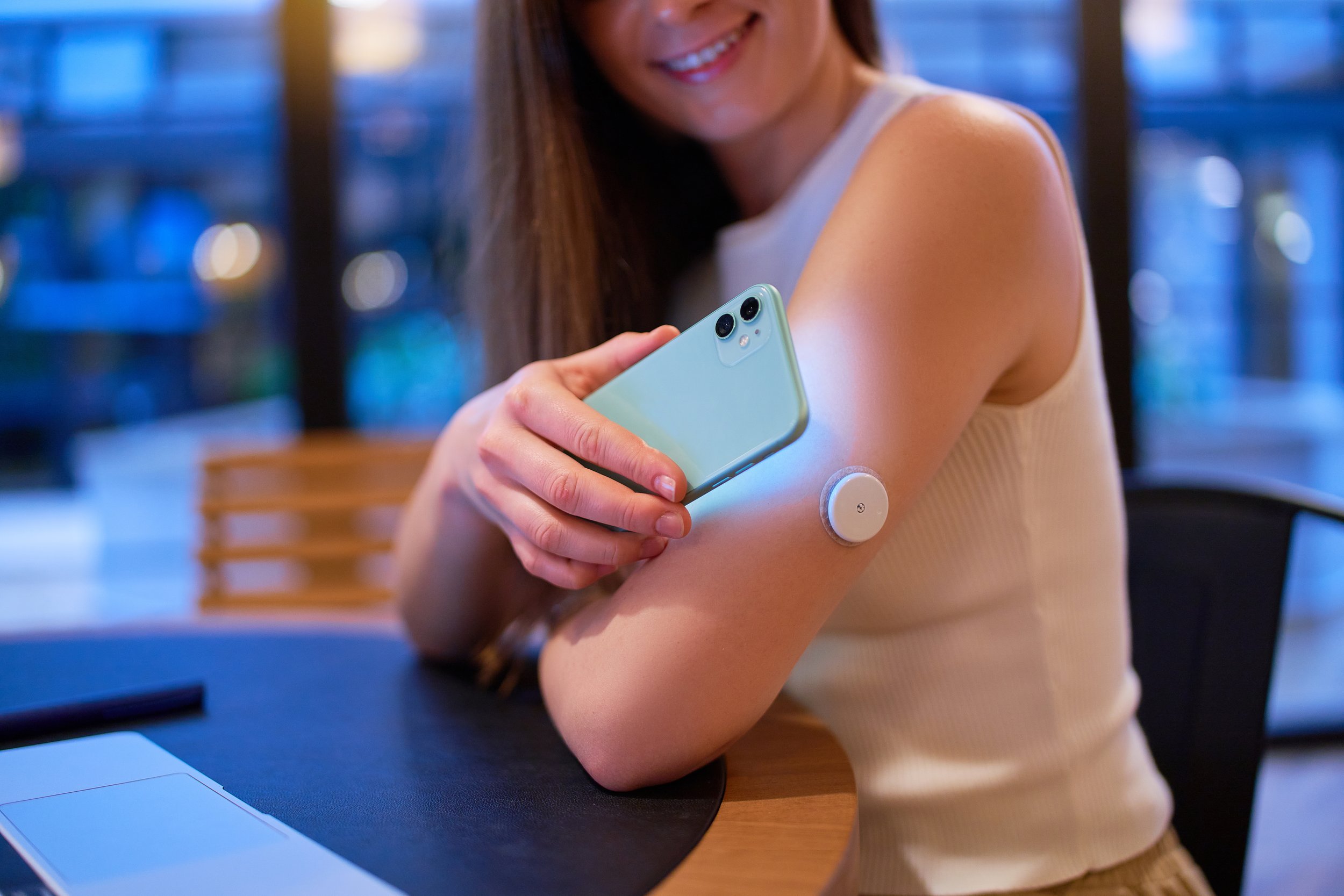
Continuous glucose monitors started as a diabetes device. In 2026, clinicians are asking whether people with prediabetes — or even curious healthy eaters — should wear one. The answer is narrower than the wellness-influencer version, and the evidence points to specific winners.
Key Takeaways
- A 2026 clinical analysis argues CGMs may complement standard tests for detecting and managing prediabetes, not replace them (U.S. Pharmacist, July 2026).
- CGMs show glucose patterns after meals and overnight that a single fasting blood draw misses, which can motivate diet and activity change (clinical analysis, 2026).
- They are most useful for people with prediabetes, gestational diabetes history, or normal fasting glucose but high A1c or risk factors (clinical analysis, 2026).
- CGMs do not diagnose diabetes and can trigger anxiety from normal post-meal spikes; they are a coaching tool, not a verdict.
What Does a CGM Actually Show?
A continuous glucose monitor reads interstitial glucose every few minutes through a filament under the skin, producing a curve instead of a single number (clinical analysis, 2026). For someone with prediabetes, that curve reveals how high and how long blood sugar stays elevated after meals, and whether it dips overnight — patterns a fasting glucose or even an A1c can hide. The 2026 analysis frames CGM as a complement to, not a replacement for, the standard fasting glucose and A1c tests (U.S. Pharmacist, July 2026).
Citation capsule: CGMs expose post-meal and overnight glucose patterns invisible to a single fasting draw, which is why a 2026 analysis positions them as a complement to standard prediabetes testing rather than a substitute (U.S. Pharmacist, 2026).
Our prediabetes without Ozempic article covers the non-drug fundamentals CGMs are meant to support.
Who Benefits Most From Wearing One?
The strongest candidates are people with prediabetes, a history of gestational diabetes, or a normal fasting glucose but an elevated A1c or strong risk factors (clinical analysis, 2026). Seeing your own numbers move after a walk or a lower-carb meal is a powerful behavior nudge. People with already normal metabolism and no risk factors get less value and more noise. Our sleep and metabolic health piece explains why timing and rest shape these curves too.
Citation capsule: CGMs help most in prediabetes, post-gestational diabetes, and normal-fasting-but-high-risk cases where seeing real-time patterns drives lifestyle change; low-risk people gain little (clinical analysis, 2026).
What Are the Downsides?
A CGM is not a diagnosis and can cause harm through worry. Normal people spike after carb-heavy meals — that is physiology, not disease — and constant alerts can manufacture anxiety or fad dieting (clinical analysis, 2026). The devices also vary, and a single "bad" reading after a birthday dinner is not prediabetes. They should sit alongside, not above, a clinician's fasting glucose and A1c.
Citation capsule: Because normal post-meal spikes can read as alarming, CGMs risk triggering unnecessary anxiety and restrictive eating in people without diabetes; they guide, they do not diagnose (clinical analysis, 2026).
If you are also managing weight, our oral GLP-1 pill article is a separate decision track.
How Should You Use One Well?
Use it as a short experiment, not a permanent identity. Wear it for two to four weeks, log what you ate and did, and look for patterns — the post-lunch slump, the benefit of a post-dinner walk — then act on those (clinical guidance, 2026). Share the data with your clinician, who can pair it with fasting glucose and A1c to decide if you have prediabetes and what to do. Our protein needs guide helps build meals that flatten the curve.
Citation capsule: Best practice is a time-limited CGM wear used to surface actionable patterns — meal and activity effects — interpreted with a clinician alongside fasting glucose and A1c rather than worn indefinitely (clinical guidance, 2026).
Frequently Asked Questions
Can a CGM diagnose prediabetes?
No. It complements fasting glucose and A1c; diagnosis still rests on standard blood tests (U.S. Pharmacist, 2026).
Is it worth it if my fasting glucose is normal?
Only if you have risk factors or a high A1c; otherwise the data add noise and anxiety (clinical analysis, 2026).
How long should I wear one?
A 2–4 week window to capture patterns is usually enough before reviewing with your clinician (clinical guidance, 2026).
Does it replace my A1c?
No. A1c reflects months of control; CGM shows day-to-day shape. You want both (clinical analysis, 2026).
Conclusion
A CGM can be a useful coach for prediabetes — showing the after-meal and overnight patterns a single blood draw misses — but it is a complement, not a diagnosis, and a poor fit for people with normal risk. Wear it briefly, learn the patterns, and let your clinician pair it with fasting glucose and A1c. The device informs the lifestyle; it does not replace the test.
Sources
- U.S. Pharmacist. CGM may complement standard tests for prediabetes detection. July 3, 2026. Retrieved 2026-08-11. https://www.uspharmacist.com/
- Clinical analysis of CGM in prediabetes management, 2026. Retrieved 2026-08-11.
Related in Metabolic & Diabetes Lifestyle Support
More from the same topic to keep reading.
Also tagged cgm & prediabetes
Cross-topic reads sharing key terms with this article.