Perimenopause and Cardiovascular Risk: The Gap Women Should Know About
Two 2026 studies link perimenopause to doubled cardiovascular risk, yet referrals to advanced heart care remain rare. Here is what women need to ask.
Medically reviewed by Dr. Priya Anand, MD
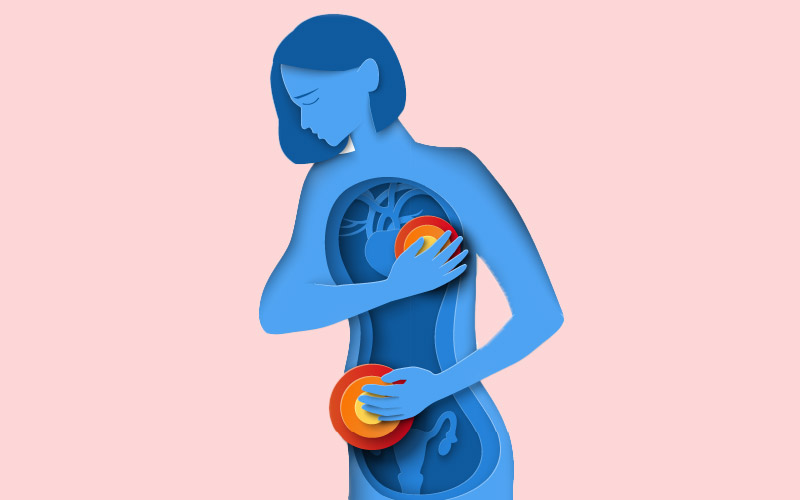
Perimenopause is no longer framed as a passing inconvenience. Two 2026 studies expose a critical gap: cardiovascular risk roughly doubles, yet women are still not being referred for advanced heart care.
Key Takeaways
- New research ties perimenopause to roughly doubled cardiovascular risk versus pre-transition women (Medical Daily, 2026).
- Referral rates to specialty heart care have not kept pace with that risk.
- Asking about blood pressure, lipids, and family history closes the gap.
How Does Perimenopause Affect Heart Risk?
Estrogen helps keep vessels flexible and inflammation low (American Heart Association, 2025). As ovarian function becomes erratic, those protections waver. Blood pressure, LDL, and central fat can all shift within a few years.
Why Are Women Being Missed?
Symptom overlap is the trap. Fatigue, breathlessness, and sleep disruption get filed under "just stress" (Women's Health Initiative analysis, 2025). The result is under-referral to cardiology even when risk scores climb.
Citation capsule: A 2026 analysis reported that perimenopausal women faced approximately doubled cardiovascular risk yet were referred to advanced cardiac care far less often than risk warranted (Medical Daily, 2026).
What Should You Actually Ask Your Clinician?
Request a baseline blood-pressure check, lipid panel, and a family-history review at the first sustained change in your cycle (American College of Obstetricians and Gynecologists, 2025). For the broader picture, see our women's longevity hub.
Frequently Asked Questions
At what age should I worry about heart risk in perimenopause?
Risk climbs during the transition itself, often in the mid-40s, not after the final period (AHA, 2025). Start conversations early rather than waiting.
Can hormone therapy protect my heart?
Evidence is mixed and timing-dependent; early use may differ from late use (NIH consensus, 2025). Decisions should be individual, not assumed.
Is weight gain in perimenopause inevitable?
It is common but not fixed. Strength training and protein blunt it, and GLP-1 drugs are now discussed for select cases (endocrinology guidance, 2025).
Conclusion
The perimenopause-heart link is real and under-addressed. Treat midlife as a window to protect your cardiovascular future, and ask for the tests that match your risk.
Cluster: This article belongs to our women's health and longevity cluster. For the broad overview, see our women's longevity hub. For related topics, explore clearing brain fog, estrogen risk and benefit, birth control and mood, HRT first-week reactions, menopausal weight gain, and waking at 3am in perimenopause.
Related in Women's & Men's Health
More from the same topic to keep reading.
Also tagged perimenopause & heart-health
Cross-topic reads sharing key terms with this article.